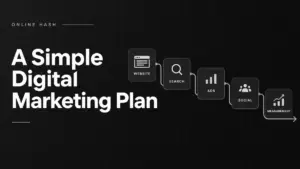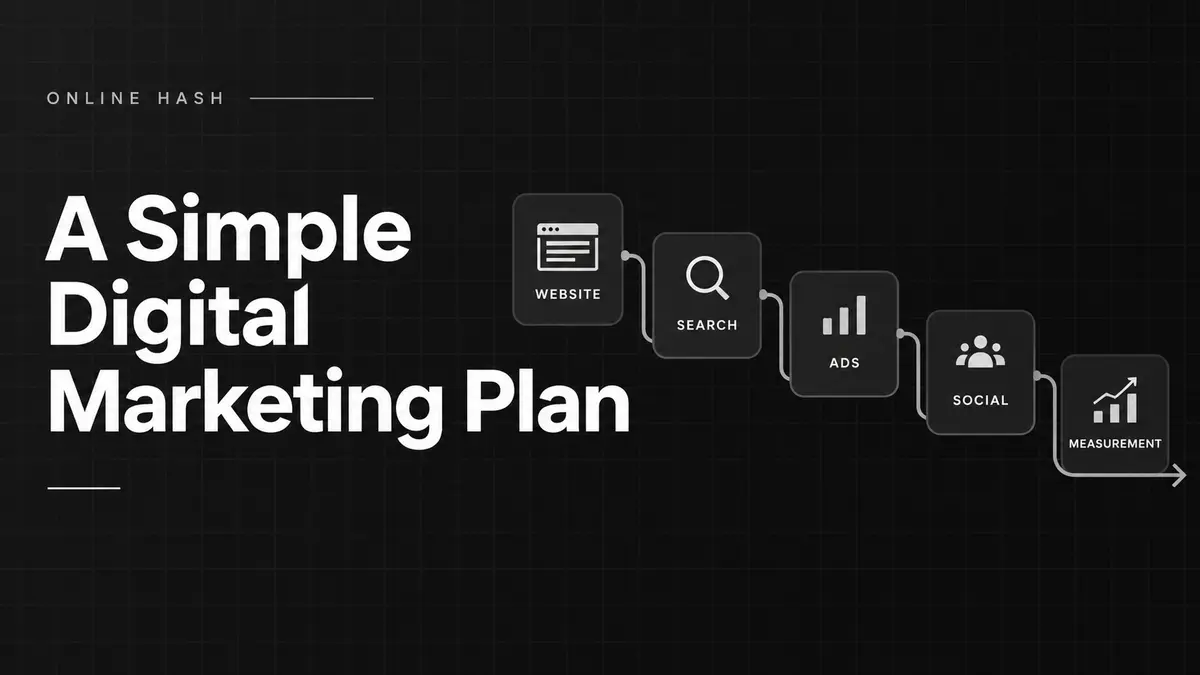
A practical digital marketing plan starts with one commercial goal, accurate tracking and channels matched to customer intent.
Short answer: start with one commercial goal, a website that converts, accurate tracking and one or two channels matched to customer intent. A simple plan executed consistently is more useful than being active everywhere without clear measurement.
1. Choose one primary business goal
Define a measurable outcome for the next 90 days, such as qualified quote requests, booked consultations or online sales. Record your baseline and decide what an acceptable cost per result would be.
2. Clarify your ideal customer and offer
Identify the customer problem, location, buying trigger and reason to choose your business. Turn this into a clear offer rather than a list of features.
3. Prepare the website
Build or improve focused service and product pages. Each important page should answer common questions, load quickly on mobile, show relevant trust signals and provide one obvious next step.
4. Set up measurement
Track forms, calls, bookings and purchases using suitable analytics and advertising tools. Test the setup before spending money. Use consistent campaign naming and keep ownership of your accounts.
5. Select channels based on intent
- Google Ads: capture people actively searching for a service or product.
- SEO: build lasting visibility for services and customer questions.
- Google Business Profile: support local discovery and trust.
- Social media ads: create awareness, demonstrate offers and remarket.
- Email and CRM: follow up leads and encourage repeat sales.
Do not choose a channel only because competitors use it. Match it to the customer journey and your capacity to respond.
6. Create a manageable content plan
Answer real questions about cost, process, comparisons, suitability and common mistakes. One useful article can support search visibility, sales conversations, email and social content. Google recommends people-first content with a clear audience and purpose.
7. Review and improve each month
Report on qualified leads, sales, conversion rate and cost per outcome. Identify what changed, what was learned and the next action. Reporting frequency can increase when a campaign is launching or needs closer attention.
A practical 90-day order
- Month one: strategy, website priorities and tracking.
- Month two: launch one acquisition channel and improve core pages.
- Month three: optimise using lead quality and sales data, then plan the next channel.
Frequently asked questions
How many marketing channels should a small business use?
Start with the fewest channels needed to reach the goal well. Expand after you can measure and manage the first channel consistently.
How often should results be reported?
Monthly reporting suits many ongoing campaigns, with more frequent communication during launches or when decisions are needed.
Do I need a large budget?
No, but your budget must be realistic for the market and concentrated enough to learn. Improve the foundation before spreading spend widely.
Build a plan focused on outcomes
I provide digital marketing services for small businesses across Australia, including Google Ads, SEO, social media paid ads, WordPress and Shopify. You can communicate with me directly, with clear fees and reporting focused on leads or sales. Let’s plan your next step.